Sienna Giuseppi
Architecture

Intro to Architectural Design

Introduction to Architectural Design is a one-semester studio course focused on space-making, with an emphasis on process, abstraction, and representation. The course explores drawing conventions, orthographic projection, model building, rendering, and digital tools as methods of visual inquiry. Projects engage concepts of tectonics, scale, material, and spatial relationships, culminating in investigations of architectural themes such as threshold, view, and entry.

Architecture is approached as a discipline capable of critical cultural thinking. Through an iterative studio model, students develop formal and spatial design skills across multiple scales while refining their individual approach to contemporary architectural practice through hands-on experimentation.

Fencing Facility
Micro Apartment
Garden Pavilion
Bus Stop

Fencing Facility

Architectural Design, Spatial Systems

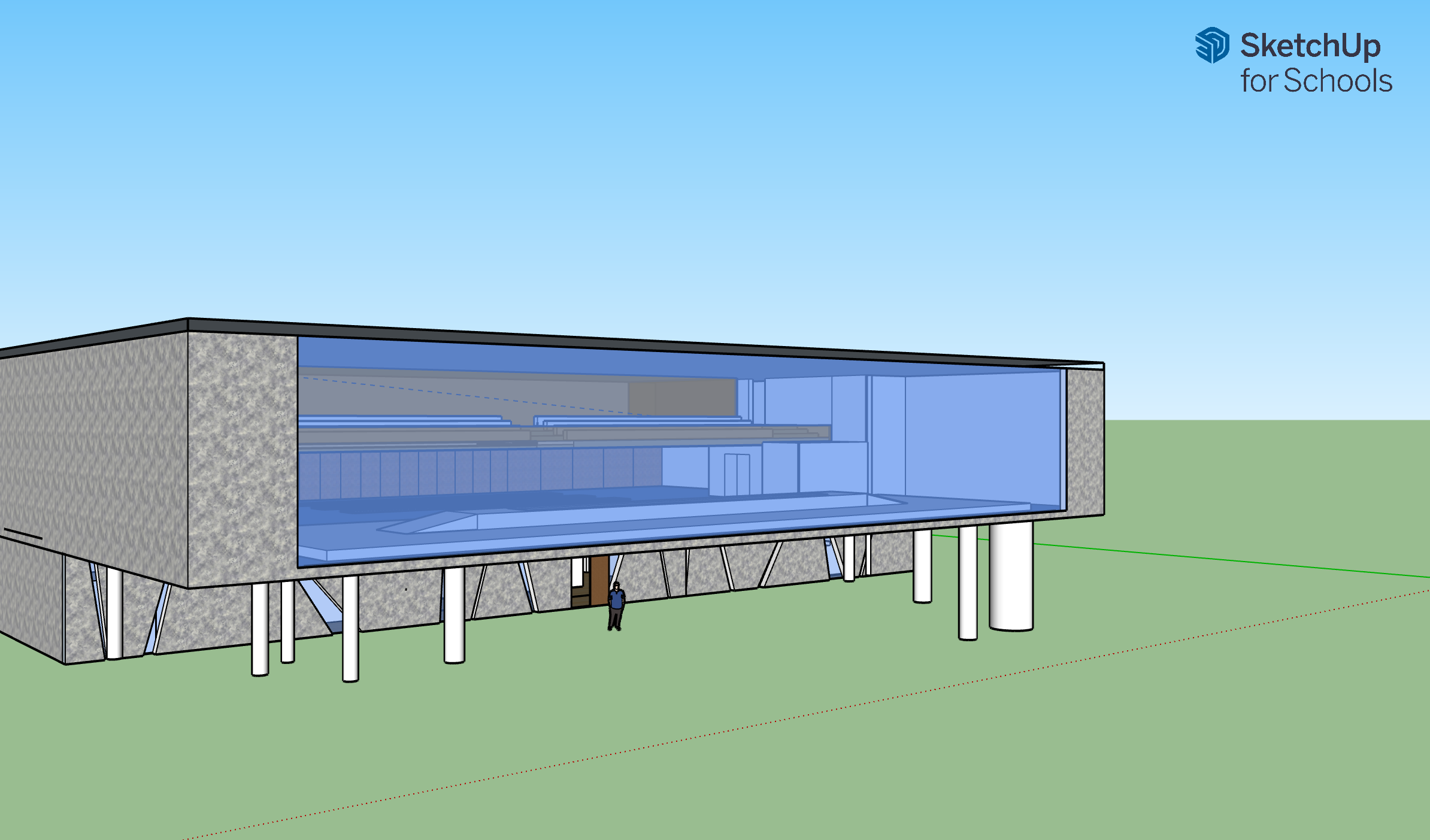
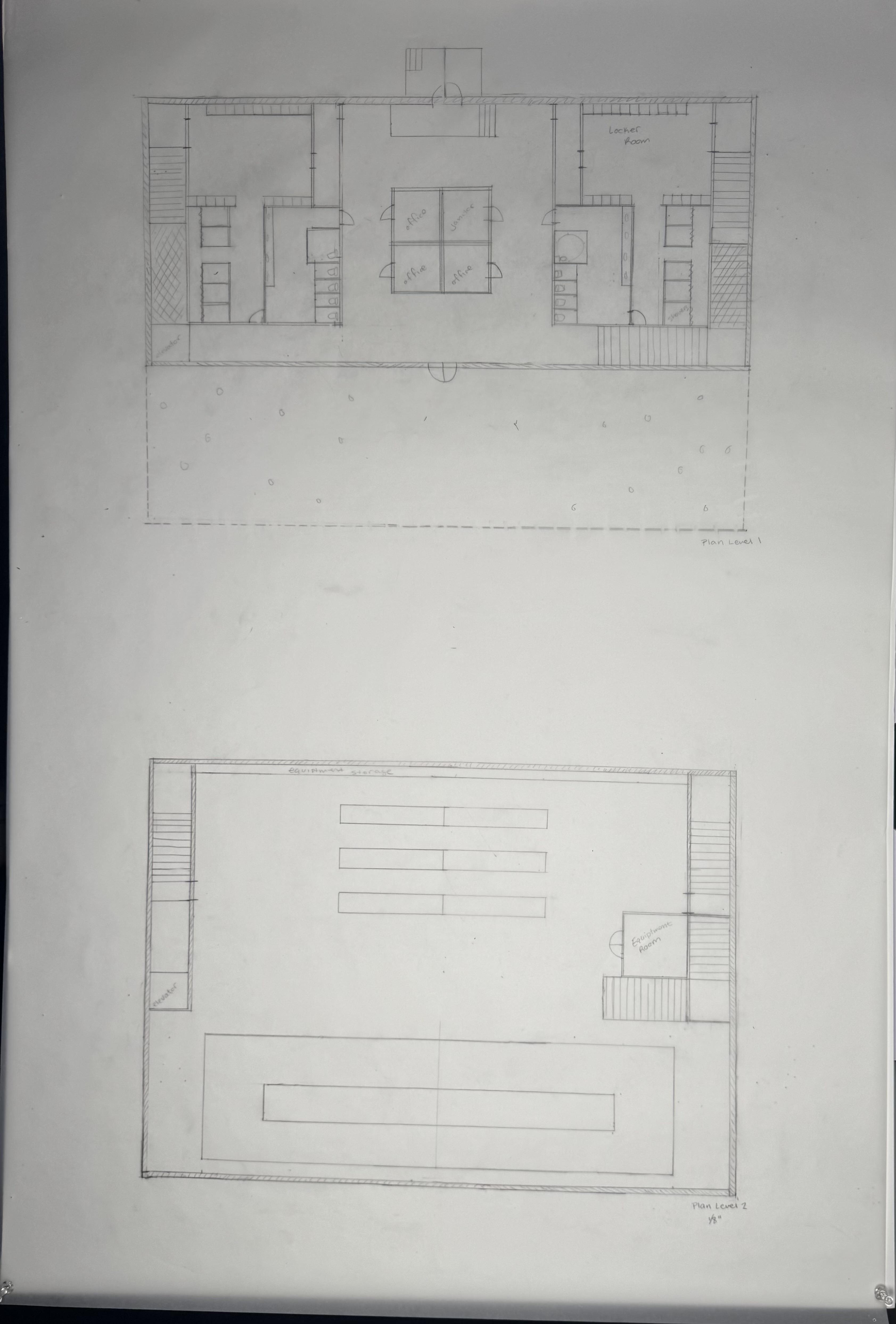
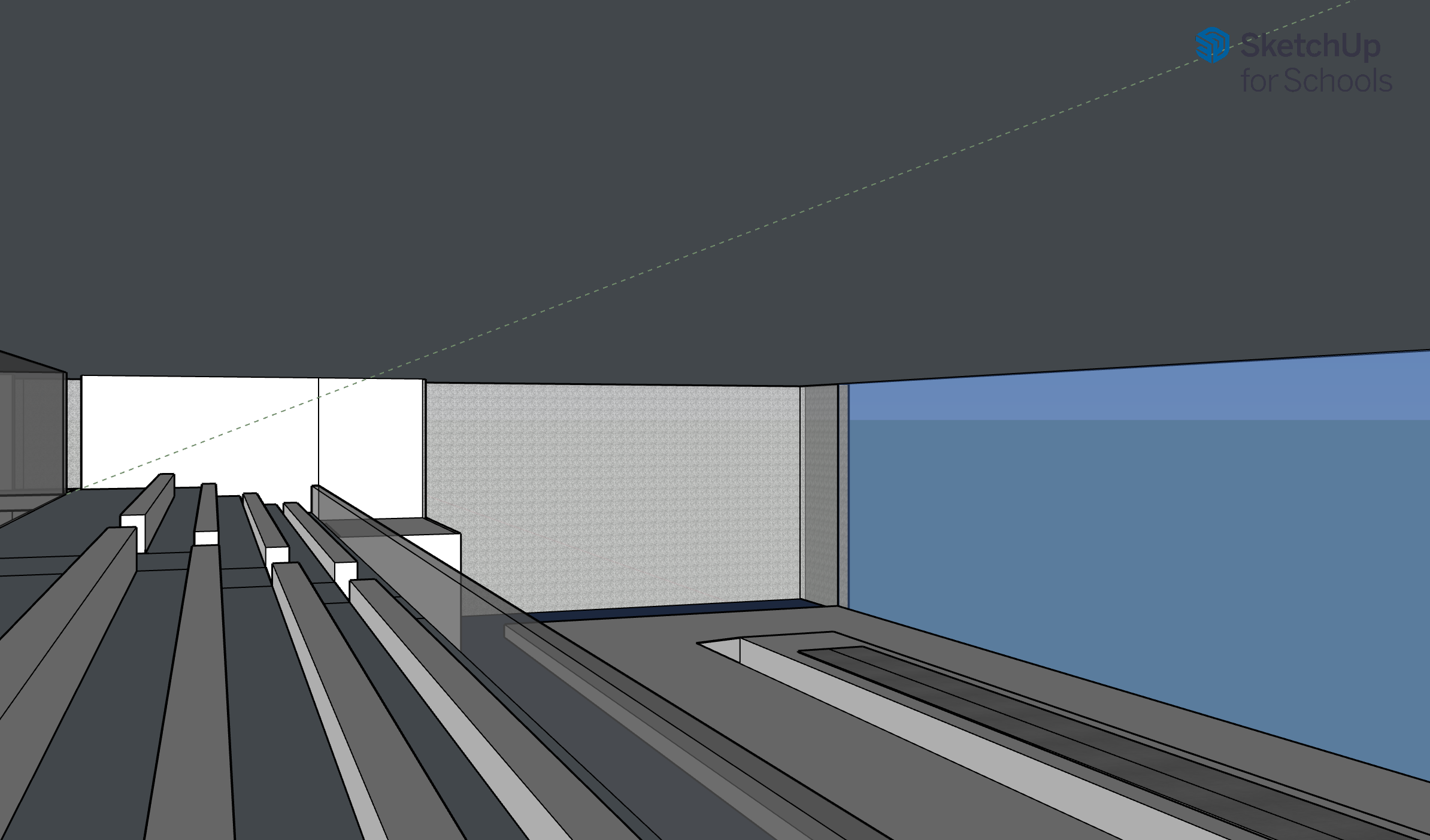
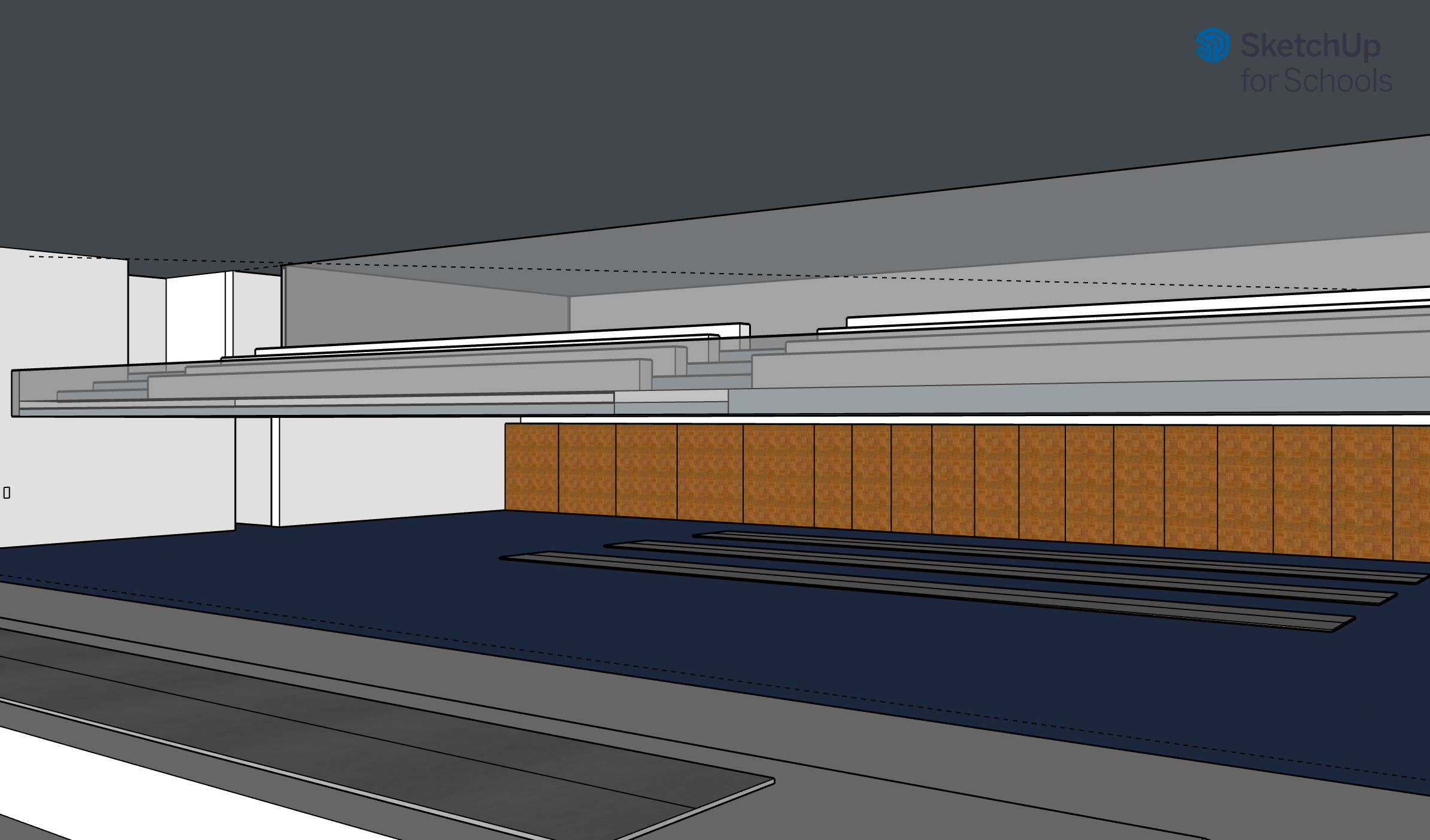
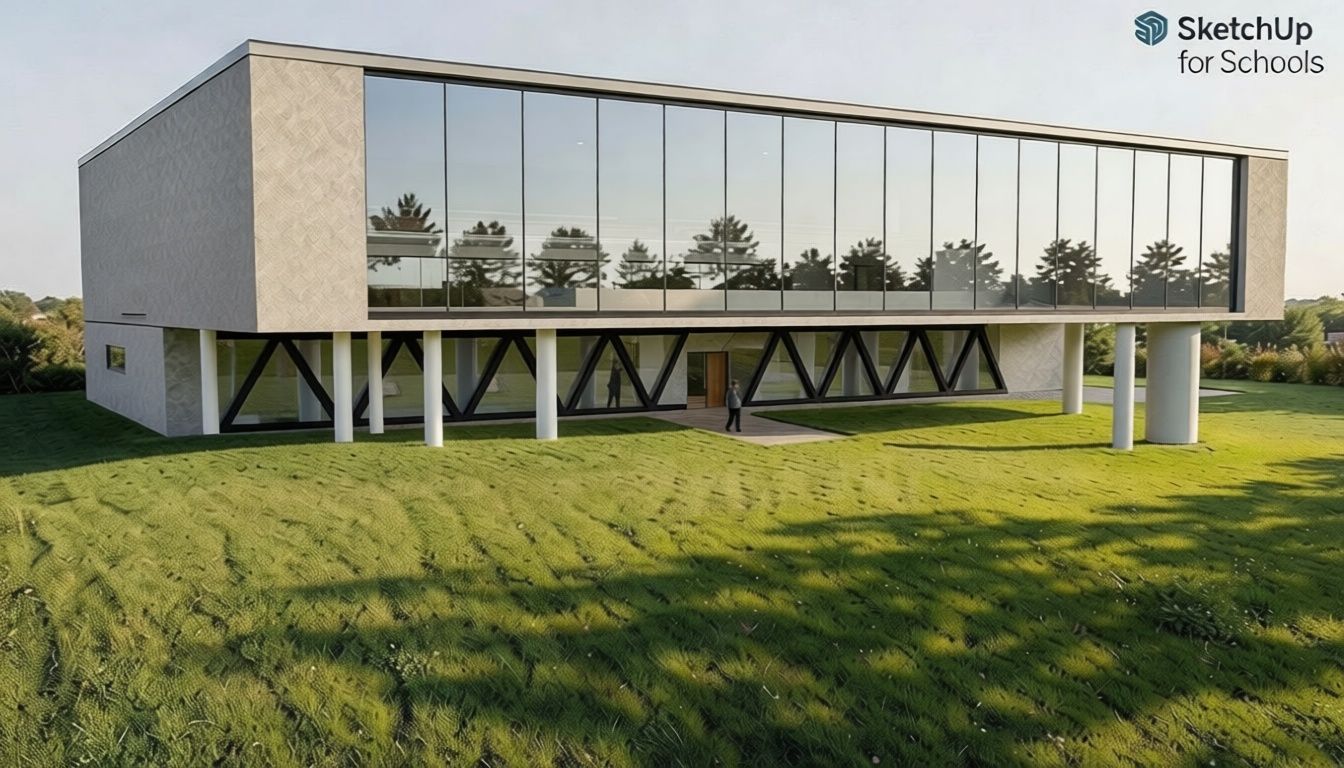
This project proposes a fencing facility for Duke University that makes the sport’s precision, speed, and tactical intensity visible to a broader audience. Rather than functioning as a closed, inward-facing athletic space, the building is designed to reveal the choreography of fencing through transparency, circulation, and section.

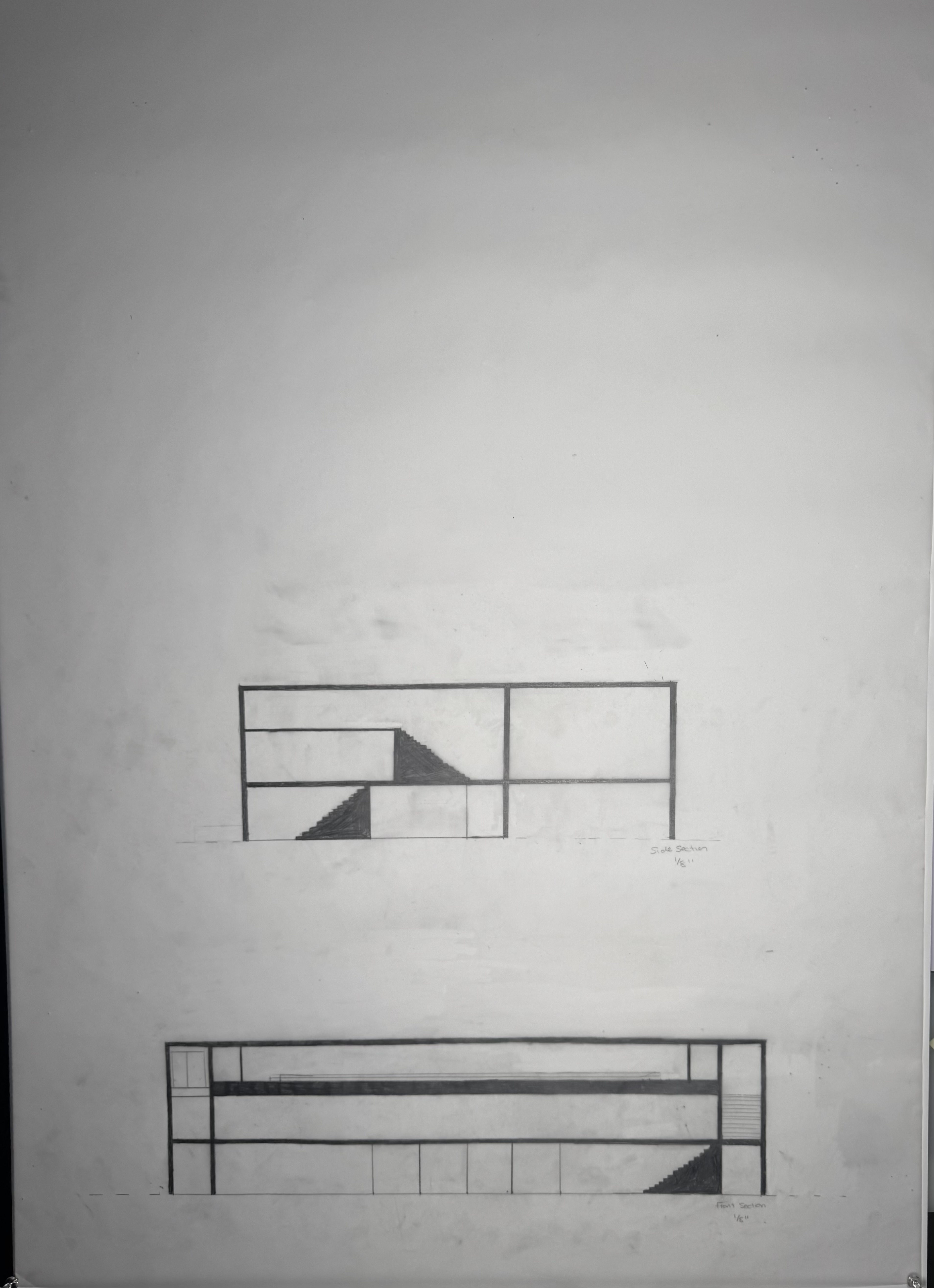
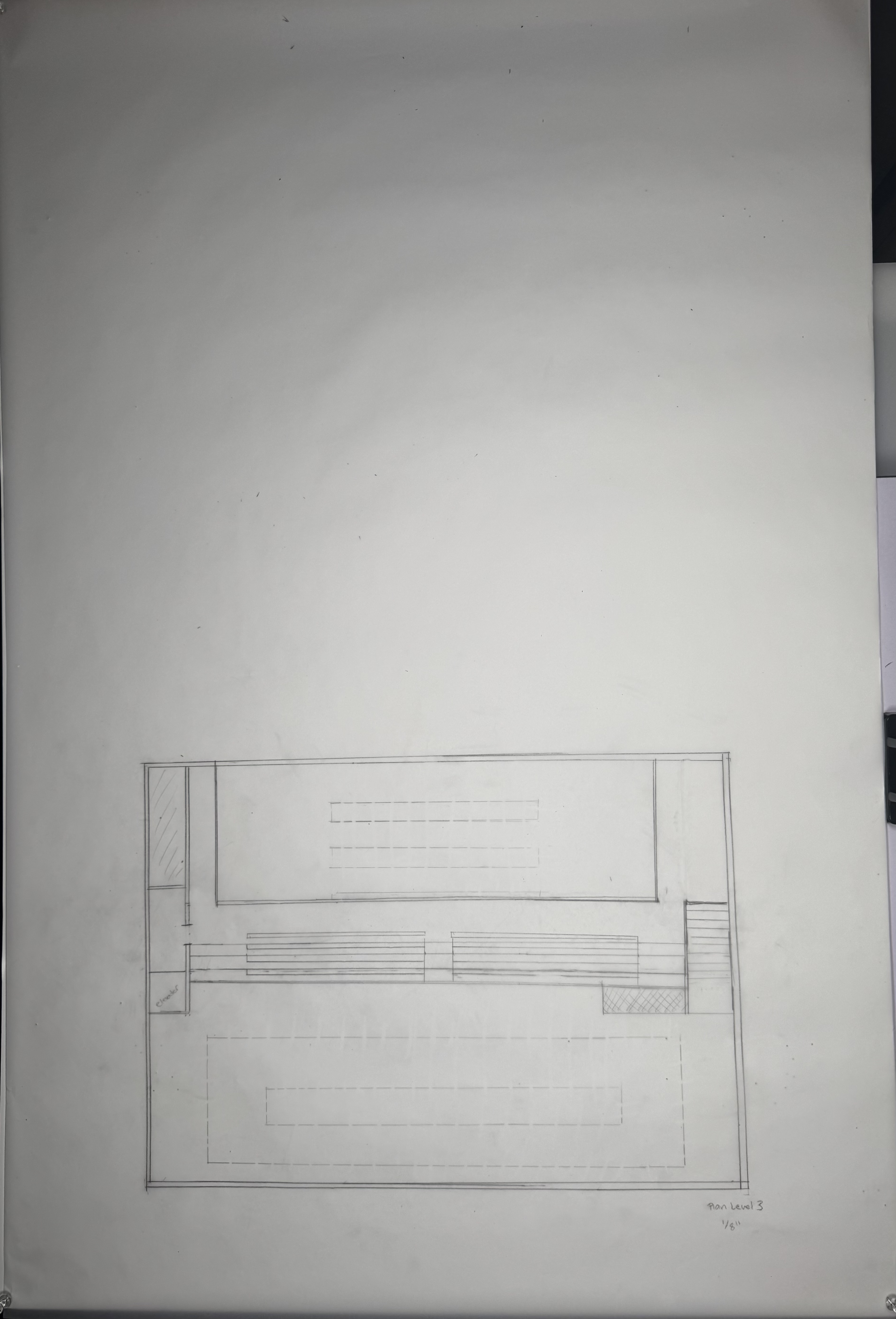
The program accommodates three practice pistes and one competition piste with seating for 200 spectators, alongside supporting spaces including locker rooms, coaches’ offices, and equipment storage. The design explores how the long, linear geometry of the piste can inform spatial organization, creating a building that is both operationally efficient and experientially engaging. By carefully negotiating visibility and privacy, the project aims to make fencing legible, accessible, and compelling to both participants and passersby.

Personal Reflection

This project explores how architecture can draw public attention to a sport that is inherently dynamic but often hidden from view. Rather than treating fencing as something enclosed, I aimed to “lure” the outside in—making the movement, tension, and precision of the sport visible and engaging to passersby.

At the same time, I prioritized the experience of the fencers and coaches within a constrained program. The design negotiates the relationship between public and private space without relying on enclosed separation. Circulation becomes the primary tool: entry staircases lead spectators directly into elevated viewing areas, while more embedded pathways connect locker rooms to the competition floor, allowing athletes to move privately and without interruption.

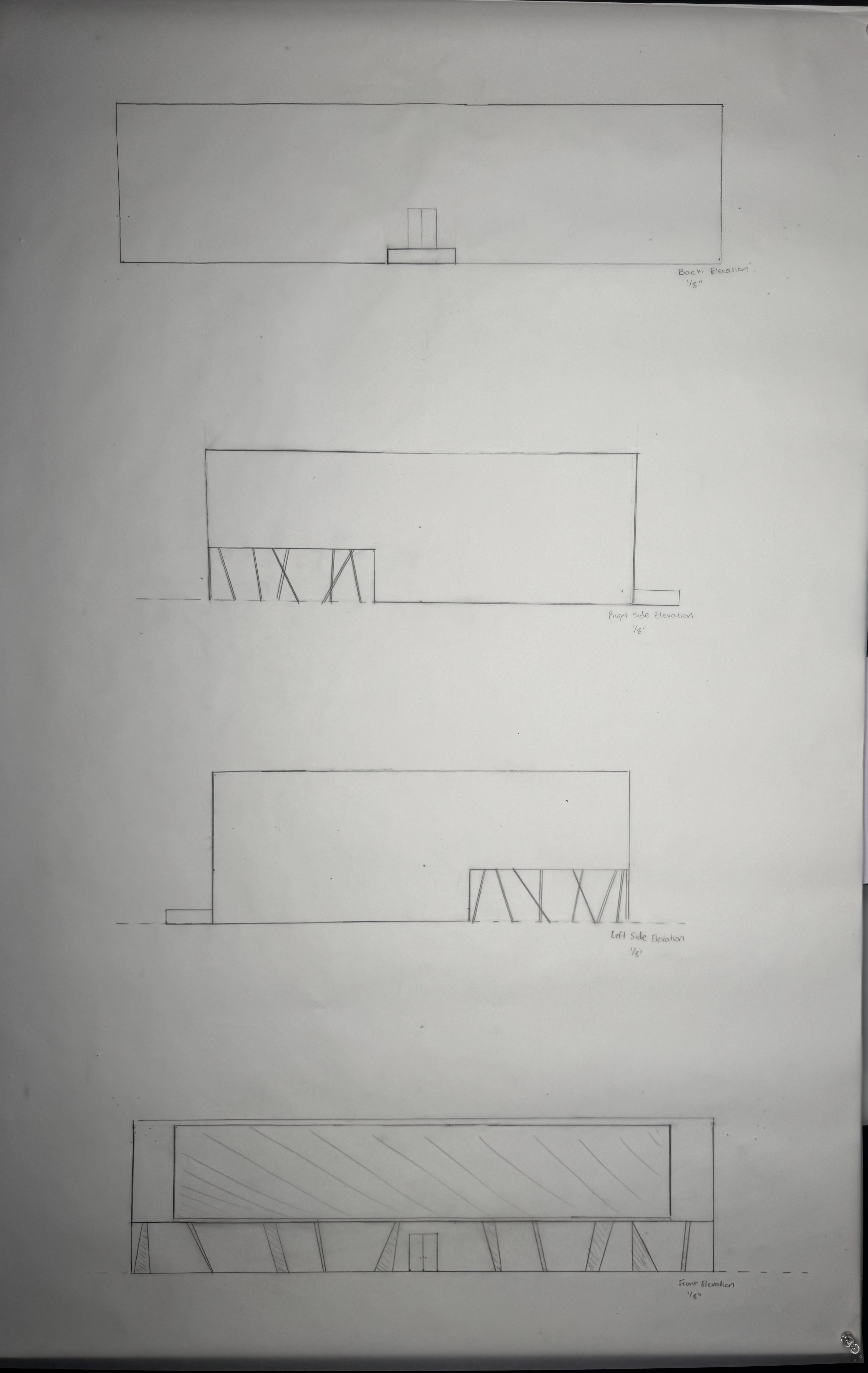
The exterior reflects this dual condition. Large expanses of glass act as a stage, showcasing moments of action and stillness, while a system of irregular metal supports introduces rhythm and tension, echoing the spatial and physical dynamics of fencing itself.

Deliverables

  • 1 plan per level at consistent scale
  • 2 sections (longitudinal and latitudinal)
  • 4 exterior elevations
  • 3 interior SketchUp perspectives
  • 3 exterior SketchUp perspectives

Micro Apartment

Sketchup Modeling, Scaled drawings

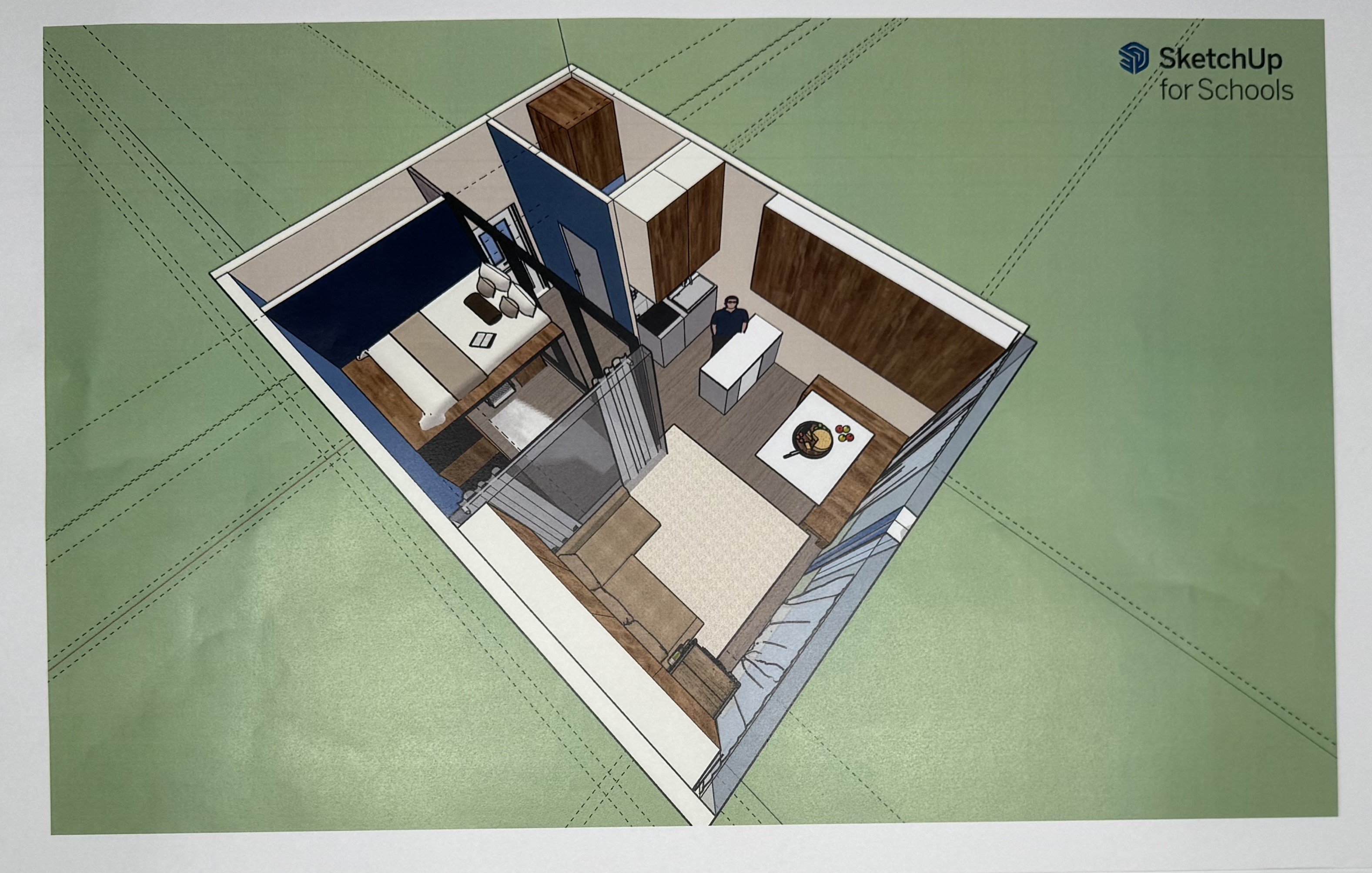
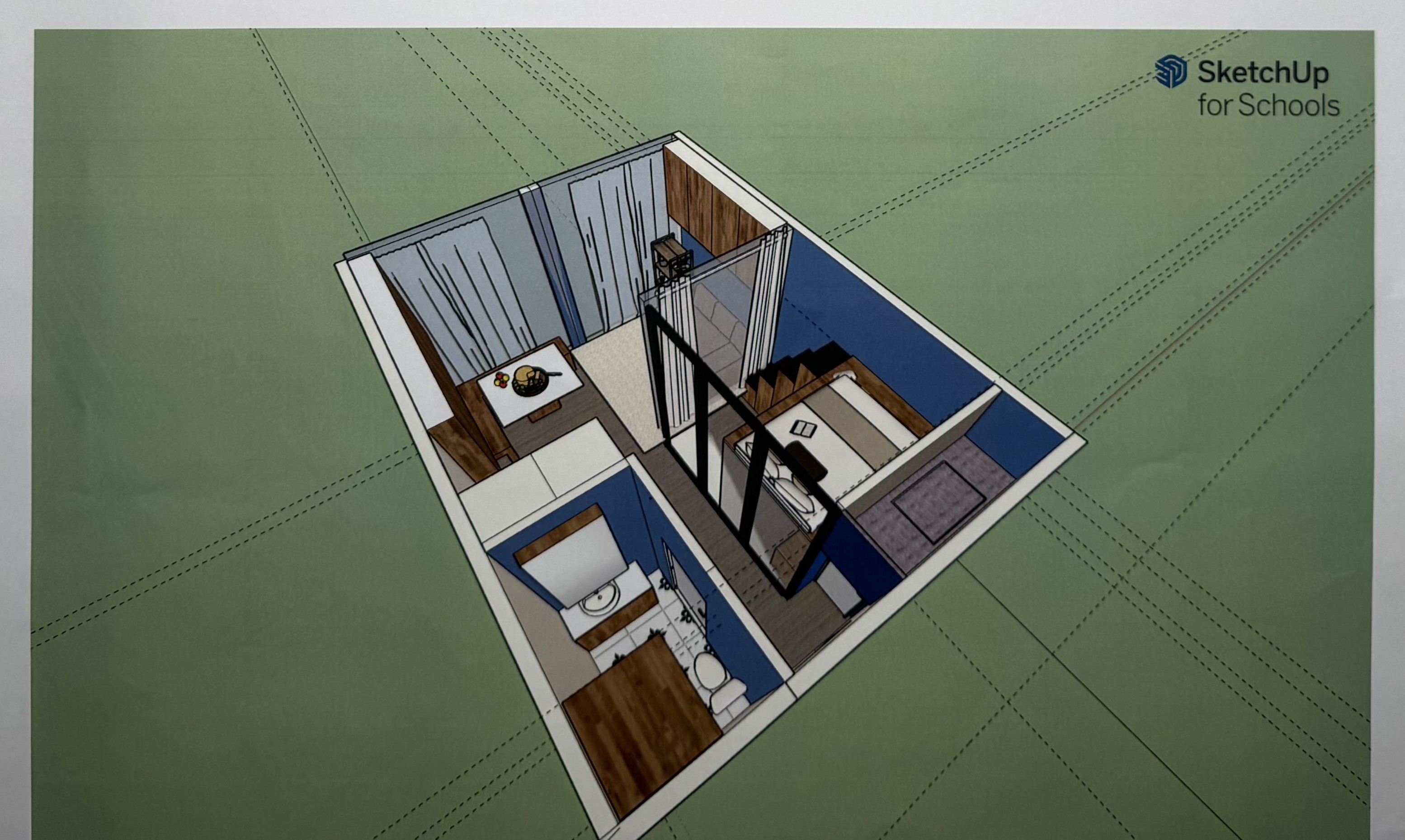
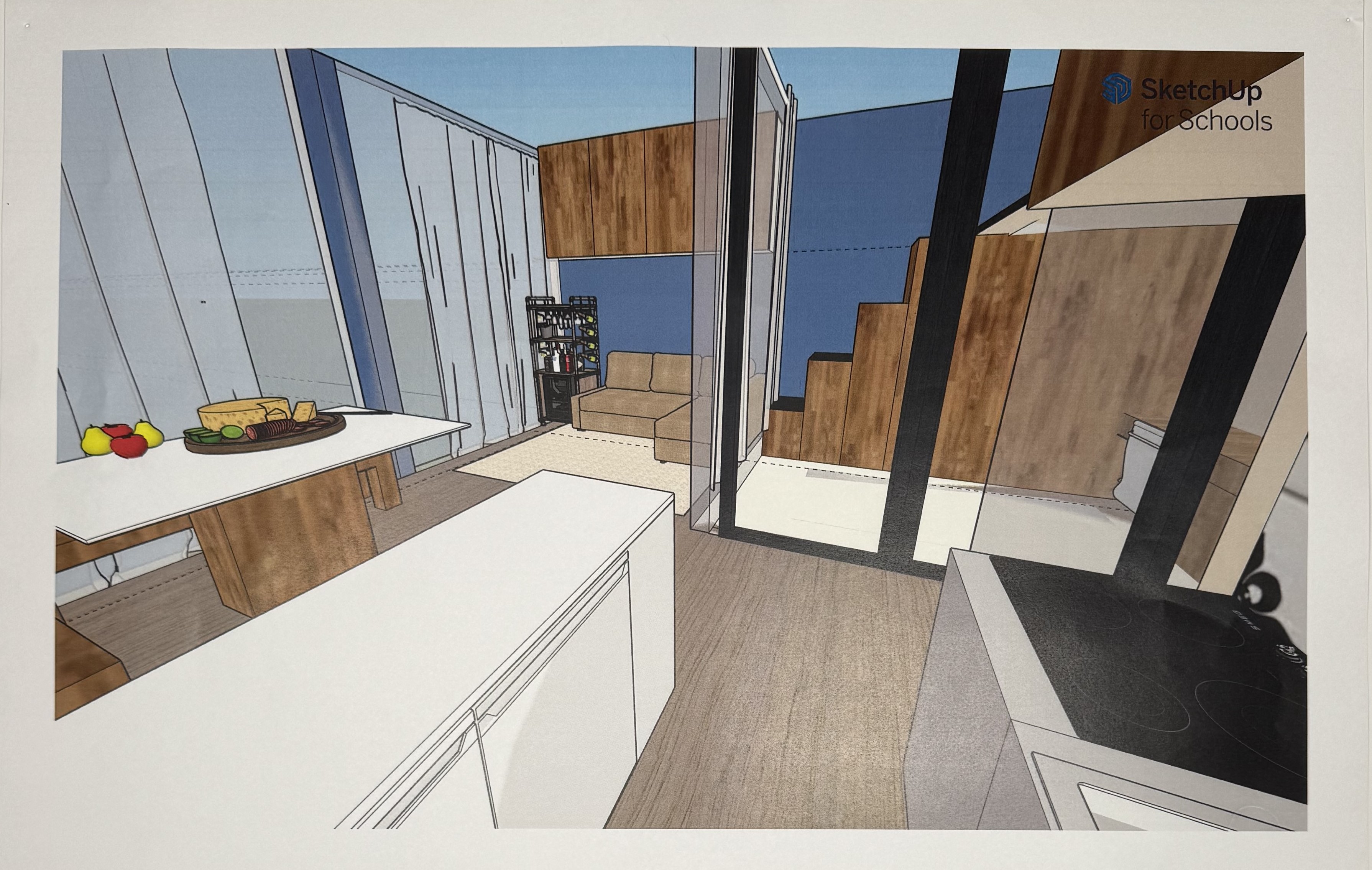
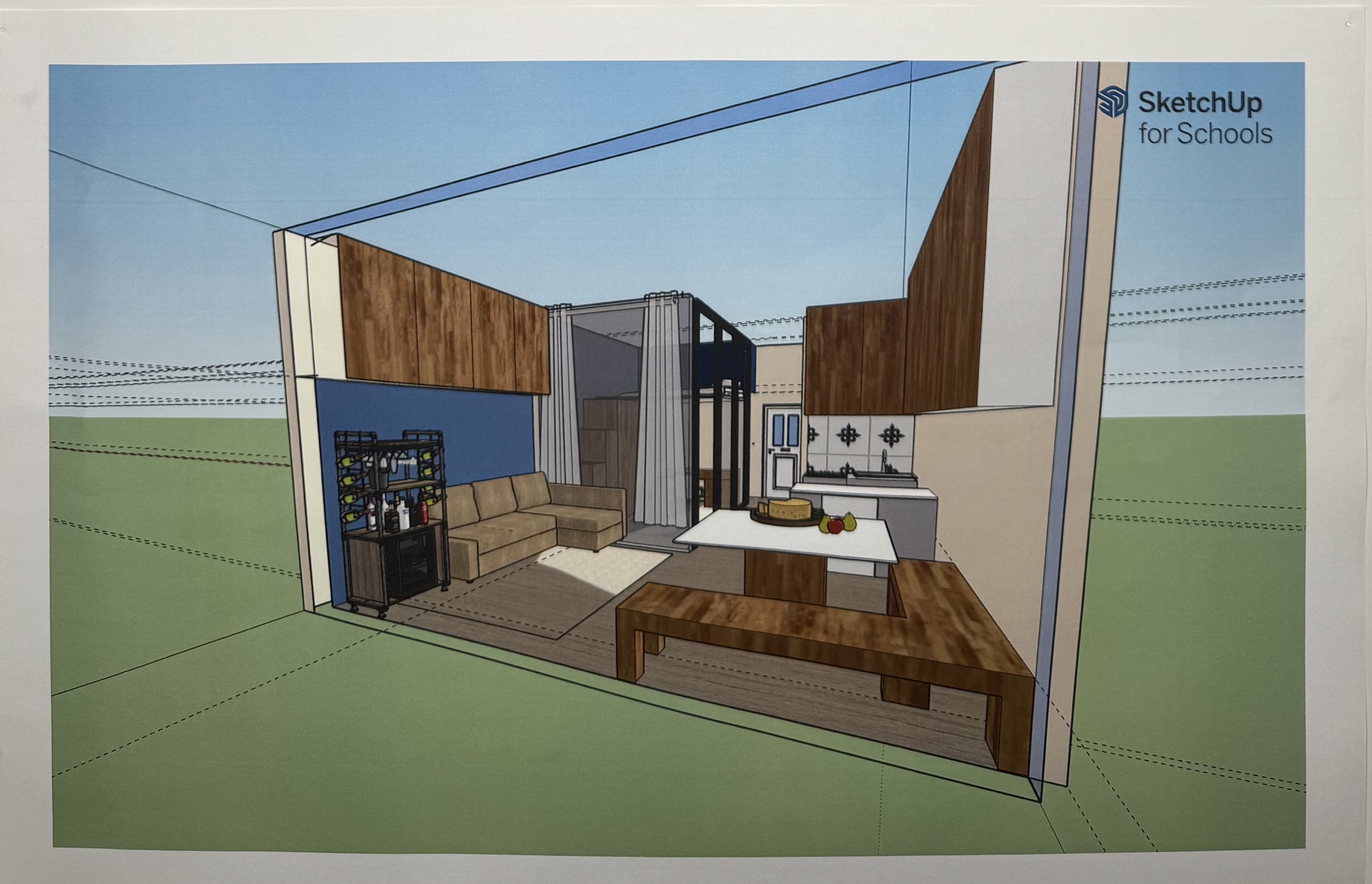
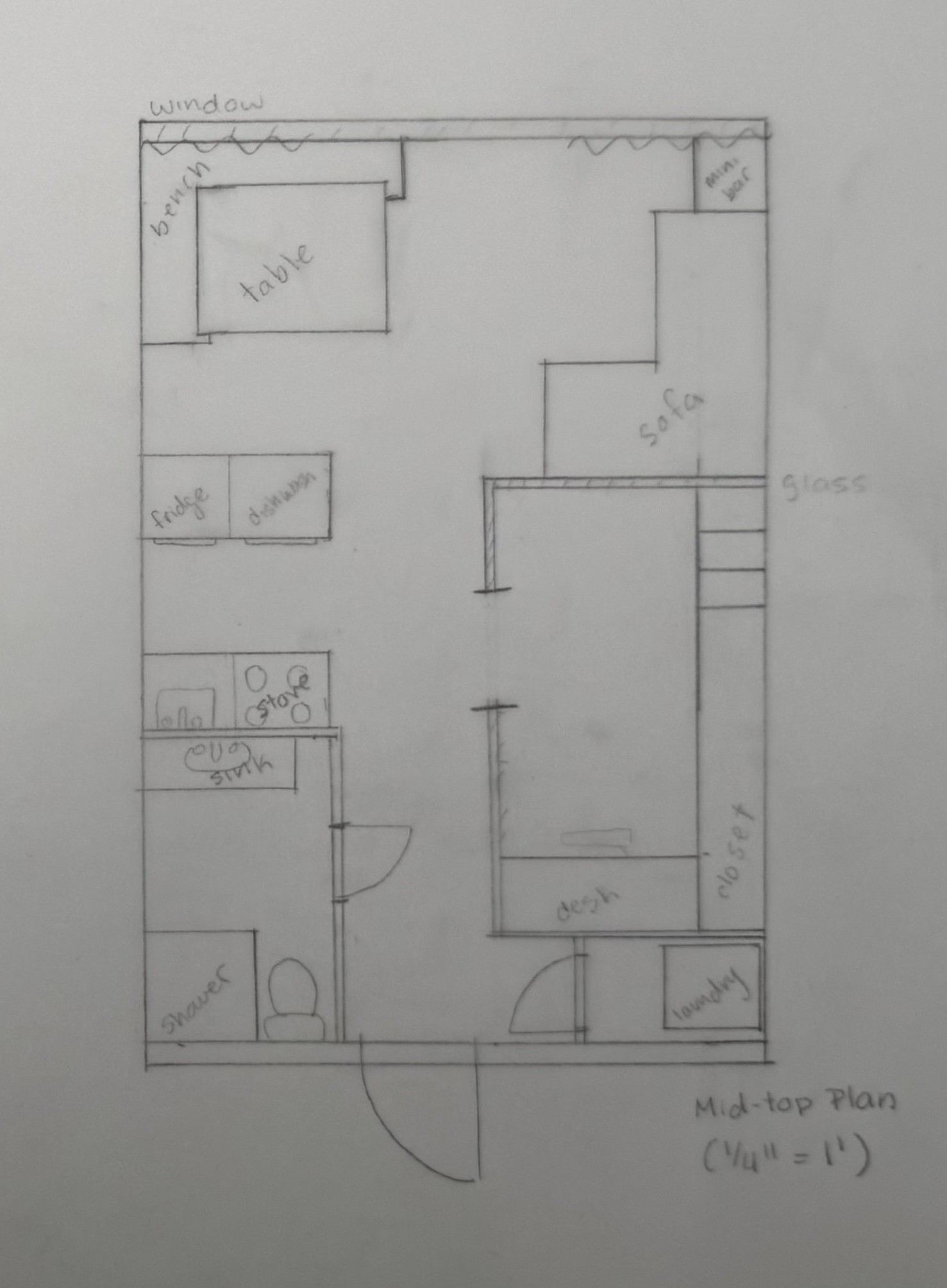
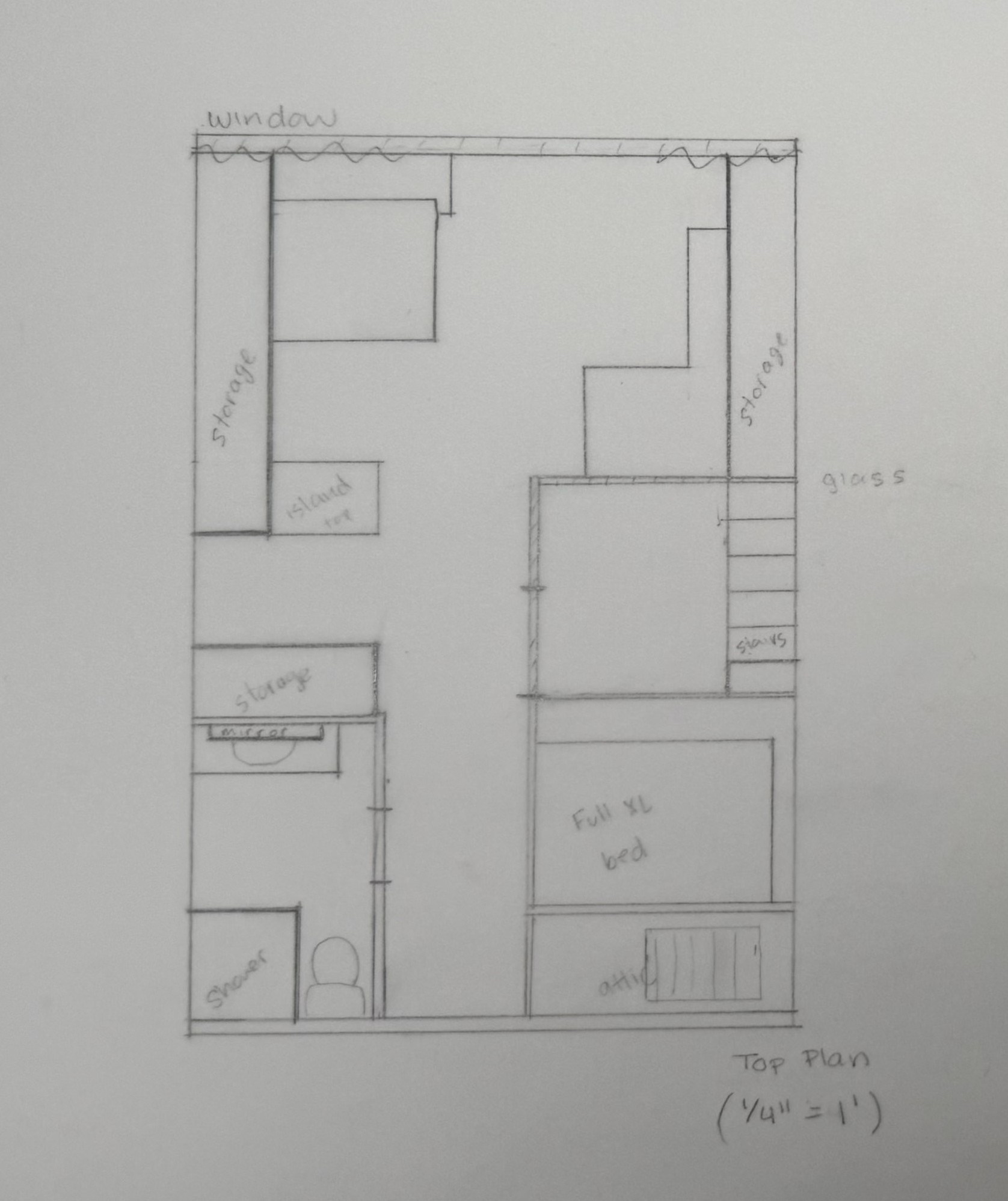
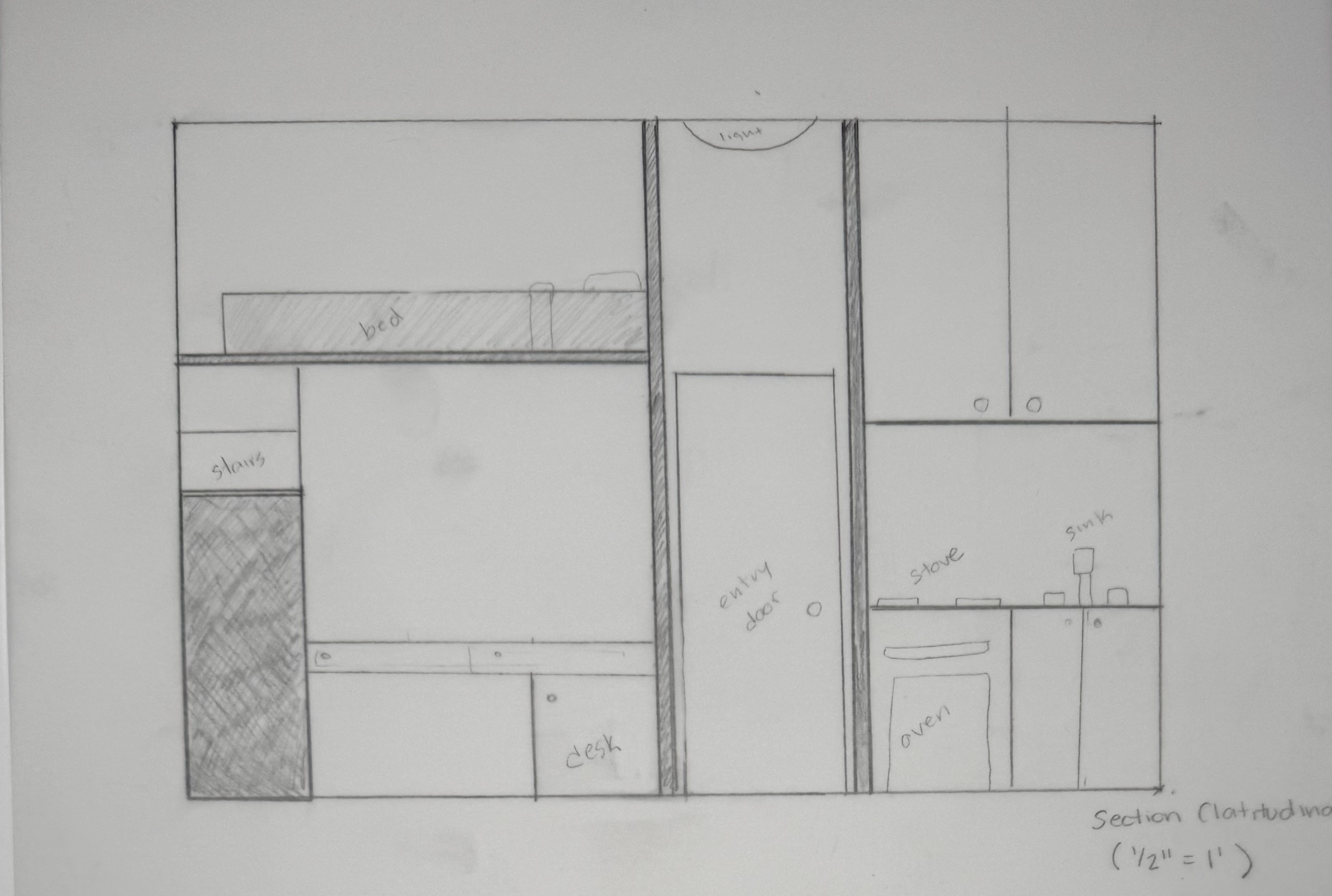
This project explores new possibilities for micro-scale housing in New York City in response to the ongoing shortage of affordable living space. Commissioned by NYCHA, the design challenges conventional ideas of domesticity within a compact 380–420 square foot footprint.

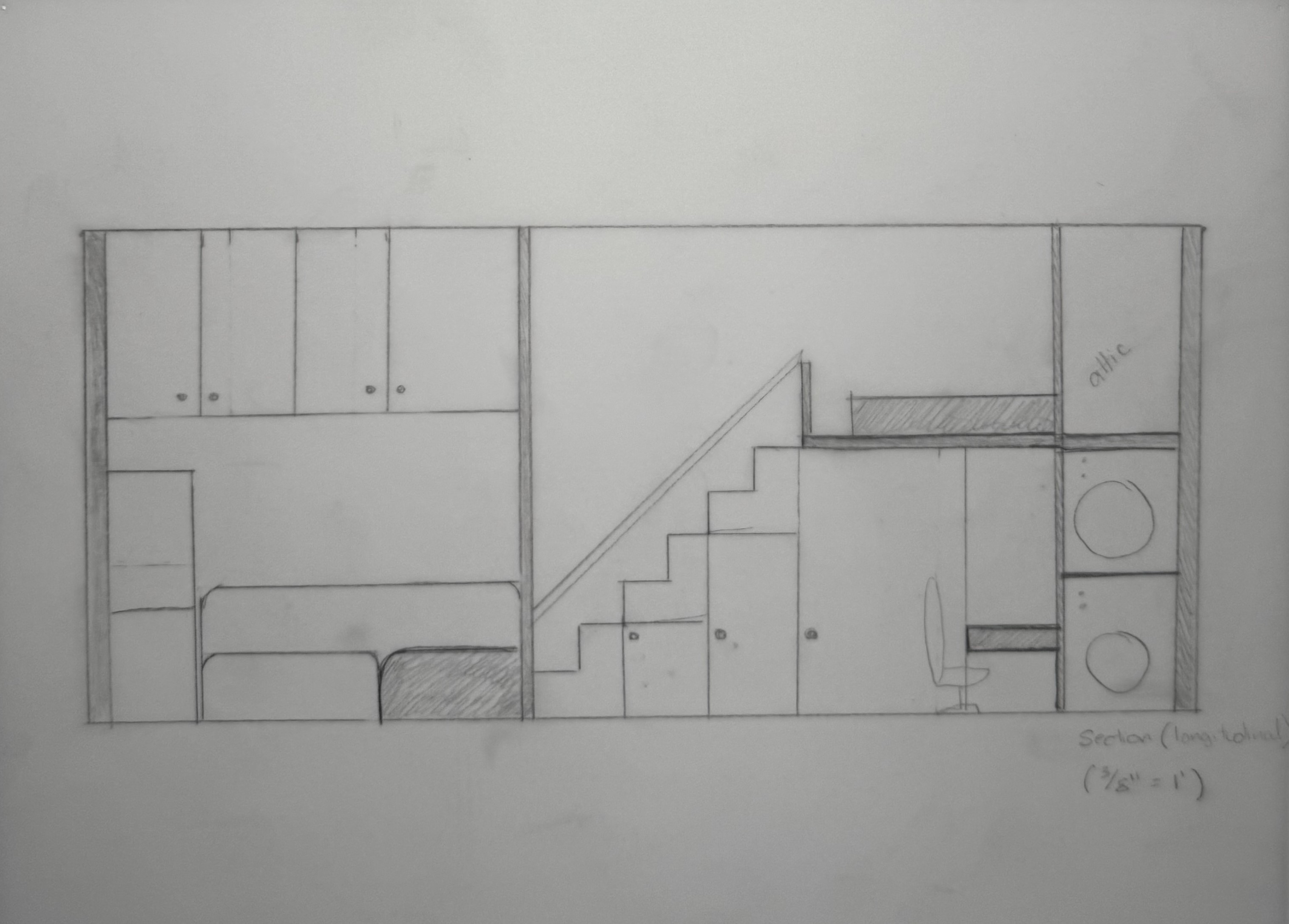
Rather than relying on standard layouts or furniture, the project rethinks how living, sleeping, cooking, bathing, and working can coexist through inventive spatial strategies. Emphasis is placed on movement, spatial hierarchy, and sectional thinking to create a dwelling that feels expansive, dignified, and responsive to the occupant’s daily life.

Personal Reflection

In designing the microapartment, I set out to create a space that could support a wide variety of needs despite its limited footprint. My primary focus was on storage and the thoughtful division of space, ensuring that the apartment could accommodate the functions of a much larger home—hosting guests, cooking, working, and relaxing—while still allowing for moments of privacy.

I imagined the space being occupied by a couple, with most daily life centered around two people. With that in mind, I designed the bedroom as a glass enclosure to allow light to flow freely throughout the apartment and to visually expand the space. Since the primary users would be comfortable with one another, complete privacy within the bedroom felt less critical; however, I included curtains to provide the option of separation when needed.

I aimed for a fluid relationship between the kitchen and living areas to make the apartment feel as open and inviting as possible. To support simultaneous activities, I incorporated a desk space beneath the bed, allowing one person to work while the other uses the main living area. I also prioritized built-in, stationary furniture to maintain organization and reduce clutter in such a compact environment.

Finally, I made sure to include essential amenities—such as a washing machine, full kitchen appliances, and attic storage—so that the apartment remains fully functional and comfortable for long-term living. Overall, the design balances openness and efficiency, creating a small space that still feels versatile, livable, and complete.

Deliverables

  • 1–2 apartment plans @ 1/2” = 1’0” (or 1/4” = 1’0”)
  • 2 sections (longitudinal and latitudinal) @ 1/2” = 1’0” (or 1/4” = 1’0”)
  • 1 plan oblique (axonometric) drawing @ 1/2” = 1’0” (or 1/4” = 1’0”)
  • 3 SketchUp 3D model perspectives (not to scale), printed on 11” × 17” paper
Garden Pavilion

Sketchup Exploration

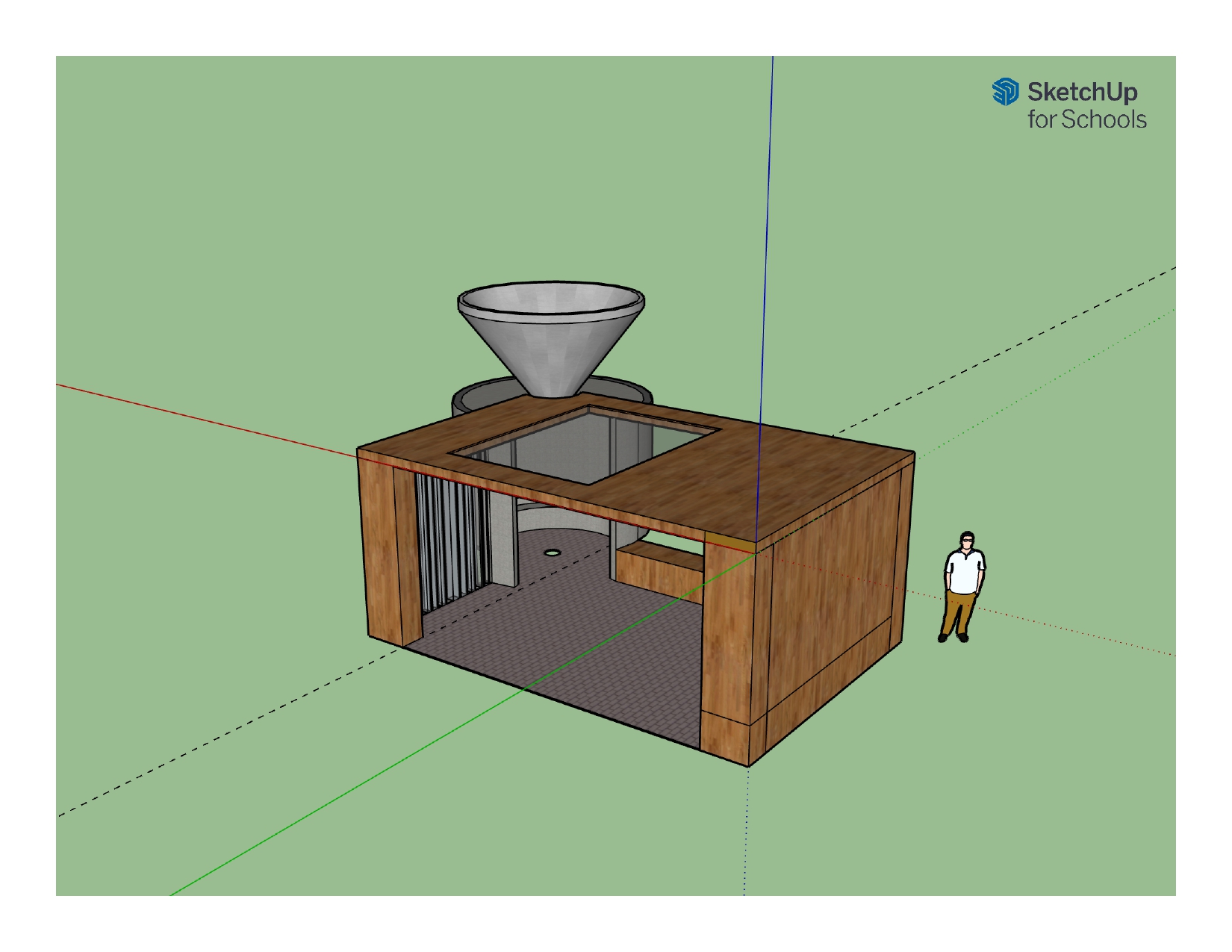
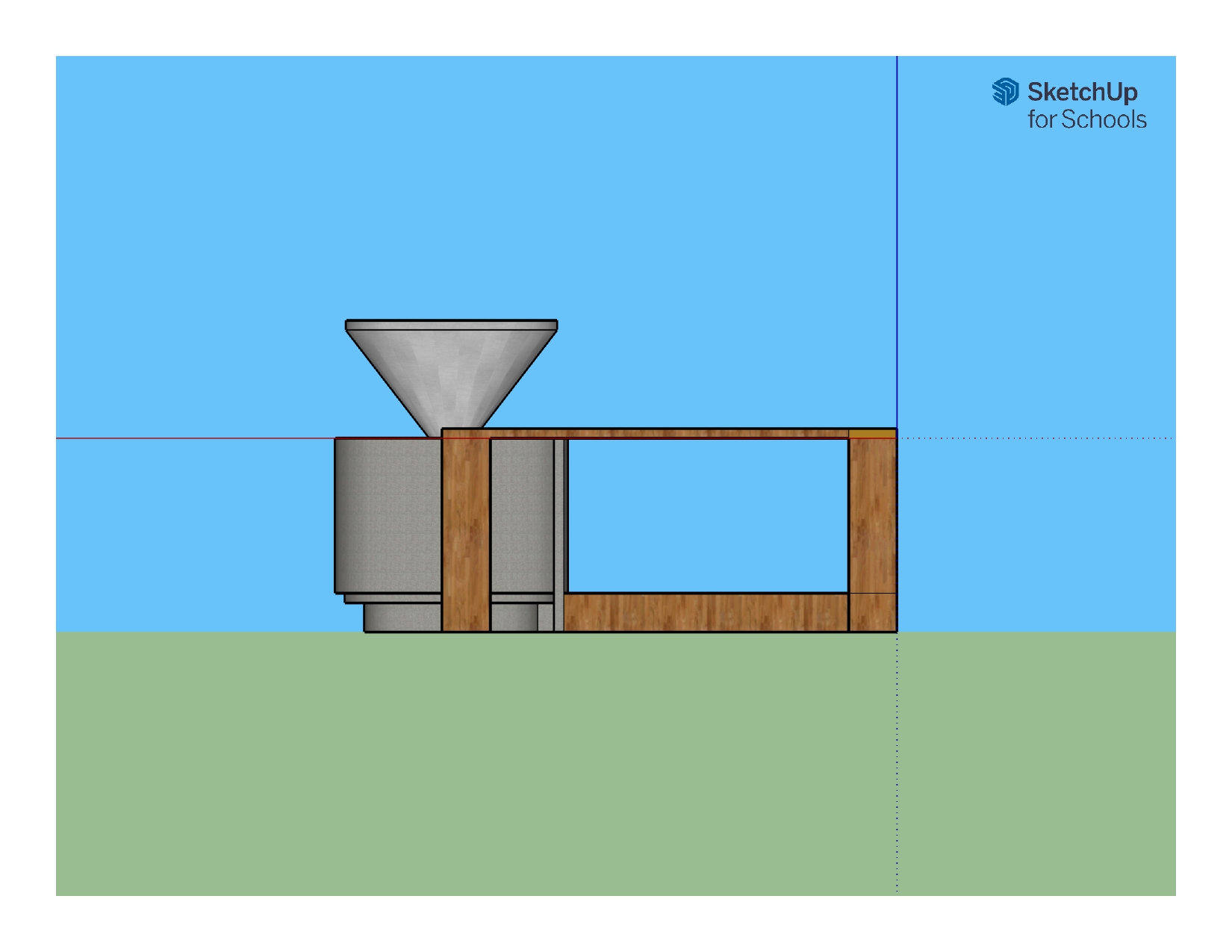
The Sarah Duke Gardens has hired you to design a simple, geometric pavilion to be built on the great lawn. The pavilion is intended to frame views of the surrounding landscape while providing shelter from weather.

The design operates under strict constraints: no furniture, lighting, doors, or movable elements, and only a single continuous floor plane. These limitations guided the project toward clarity of form and spatial intent, focusing on how geometry alone can define enclosure, openness, and experience.

Personal Reflection

When I was tasked with designing an open pavilion for the gardens, I began by thinking about what I would personally want from a rest stop in that setting. The essentials felt simple but important: shade, seating, and a structure that wouldn’t detract from the natural beauty surrounding it. I wanted the pavilion to feel like a quiet extension of the garden rather than something imposed onto it.

I was especially interested in how the space could respond to weather. I imagined that one of the most likely moments someone would seek out the pavilion would be to take shelter from sudden rain or shifting conditions. Instead of fully separating visitors from the environment, I wanted the design to engage with it. This led to the idea of incorporating weather as part of the experience.

The central funnel element emerged from both experimentation in SketchUp and a conceptual desire to connect the interior space with what is happening outside. It allows rain to be seen and heard from within the pavilion, creating a sensory link to the environment while still offering protection. This feature also defines a more serene, intimate corner of the space—somewhere visitors can sit, listen to the sound of water, and watch it fall until the weather passes.

Overall, the pavilion is intended to provide comfort without isolation, encouraging visitors to pause, observe, and experience the garden in a more immersive and reflective way.

Deliverables

  • JPG digital image files from top camera views in both parallel and perspective projections

Bus Stop

Site survey, scaled drawings

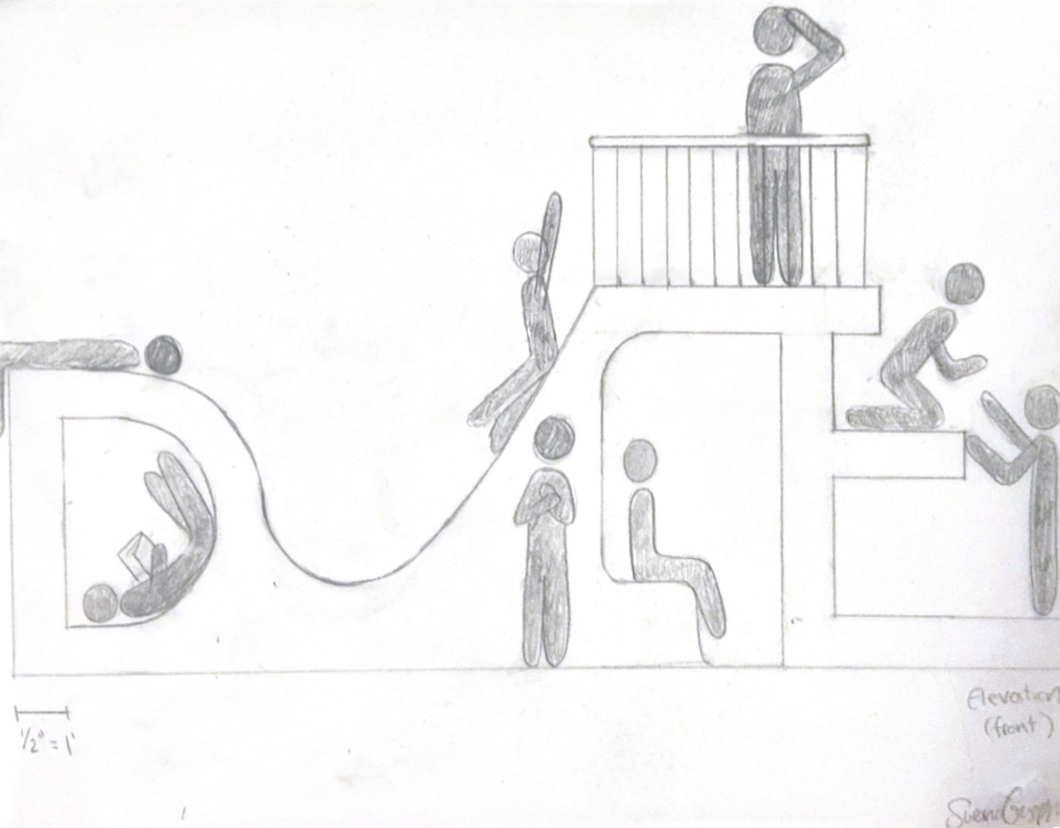
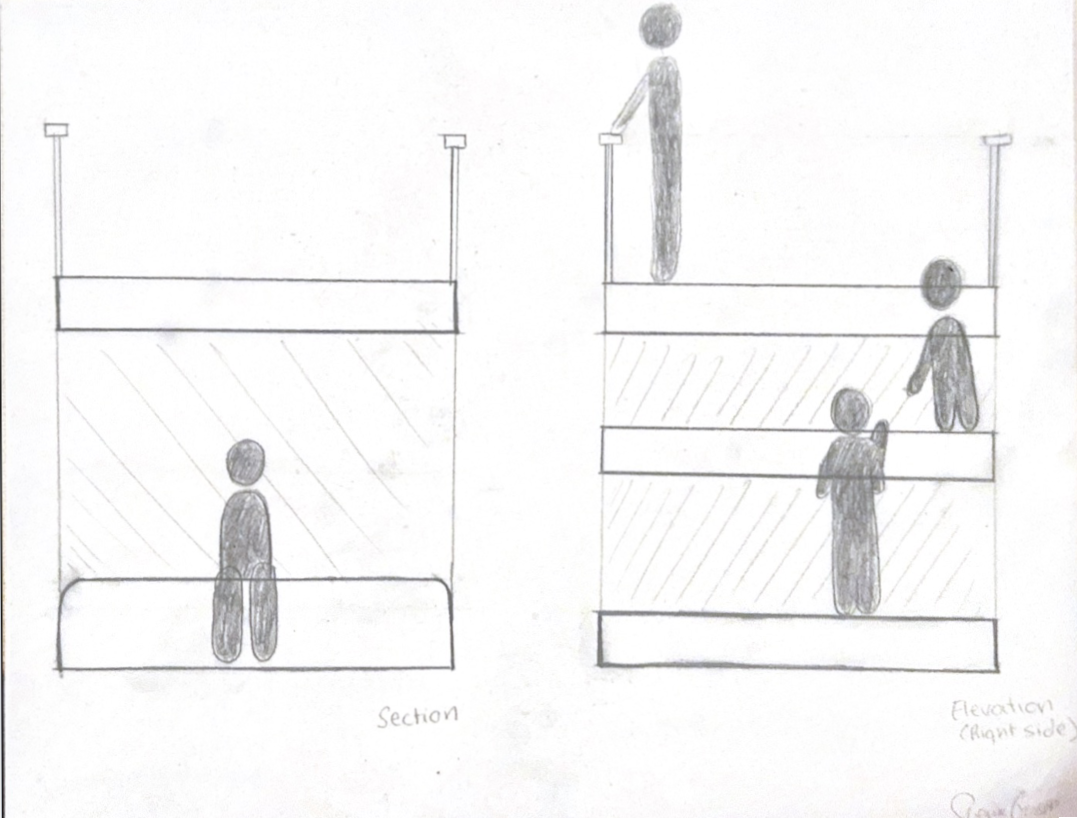
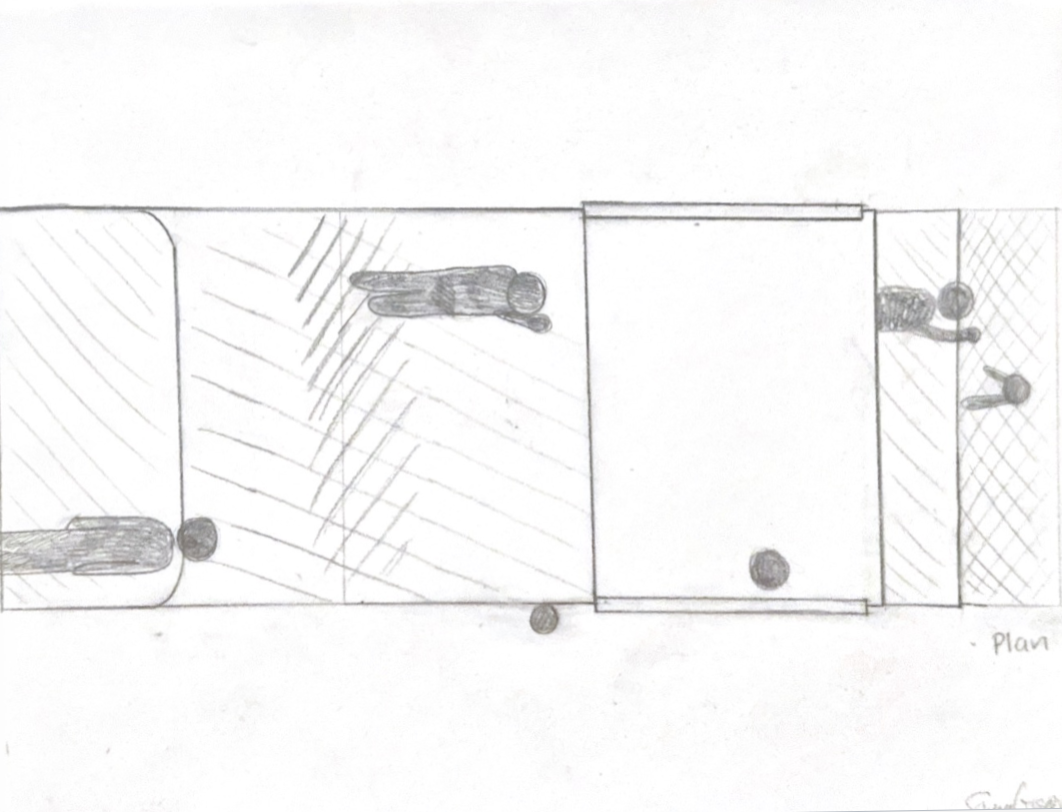
This project reimagines the bus stop at Duke University’s Smith Warehouse as an active, multi-functional space rather than a purely utilitarian structure. Responding to the diversity of bodies, behaviors, and daily routines on campus, the design proposes a single continuous form that accommodates a range of activities and poses.

Rejecting conventional ideas of enclosure and standard bus stop typologies, the project explores how form alone can support sitting, leaning, gathering, resting, and movement. Emphasis is placed on inclusivity, adaptability, and the relationship between the body and spatial geometry to create a dynamic and engaging public environment.

Personal Reflection

The goal of this project was to design a bus stop as a single continuous form that supports multiple modes of use, encouraging five distinct activities and corresponding body positions. I was interested in creating something fluid and interactive—an object that invites users to sit, lean, stretch, and sprawl in varied ways rather than prescribing a single behavior.

As I iterated through sketches of different bodily motions, the abstract forms began to resemble letter shapes. I developed this further, using the organic geometries of D, U, K, and E to subtly structure the design. These forms allowed the bus stop to remain playful and expressive while embedding a familiar identity, linking the range of human movement to the context of Duke’s campus.

Deliverables

  • 1 site plan @ 1/8” = 1’0”
  • 1 plan @ 1/2” = 1’0”
  • 2 elevations @ 1/2” = 1’0”
  • 1 section @ 1/2” = 1’0”
  • Drawings incorporating figures/diagrams to demonstrate poses and activities